
This blog is not intended to be exhaustive nor should any discussion or opinions be construed as legal advice. Readers should contact legal counsel or an insurance professional for appropriate advice.
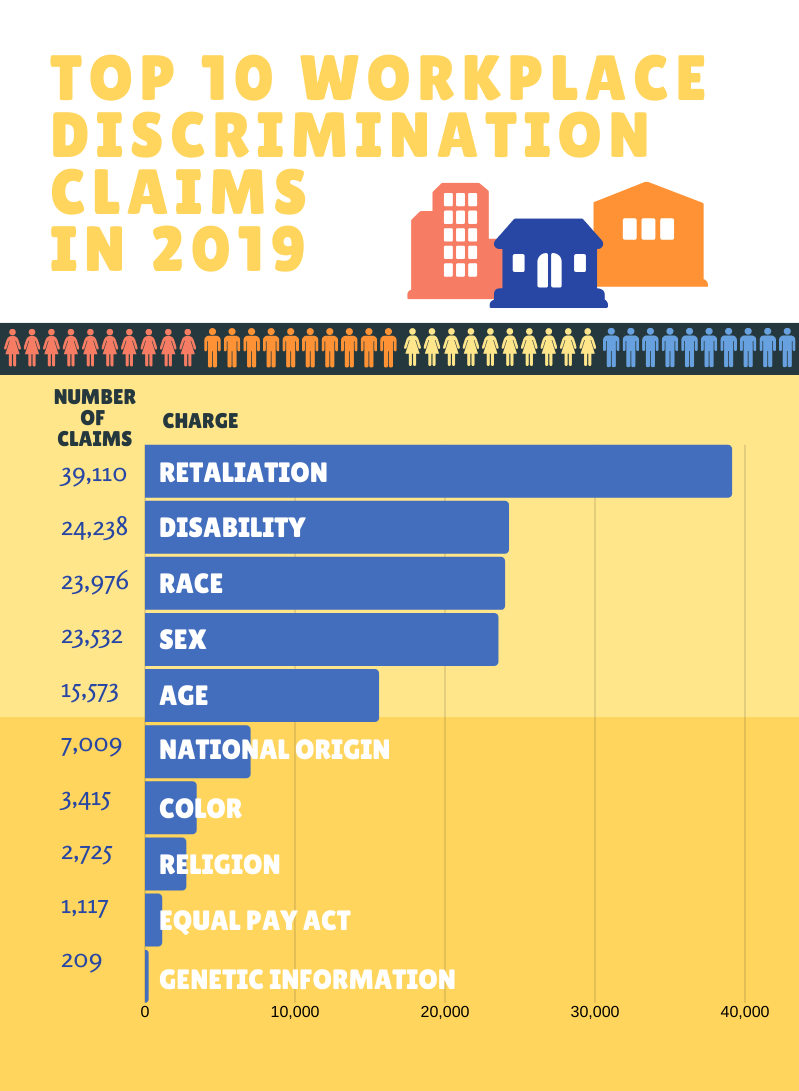
Discrimination lawsuits can be very time-consuming and expensive for employers, and can result in a loss of employee morale or reputation within the community. In 2019, the Equal Employment Opportunity Commission (EEOC) resolved more than 72,675 charges of workplace discrimination. That number is down from 76,418 in 2018 and 84,254 in 2017.
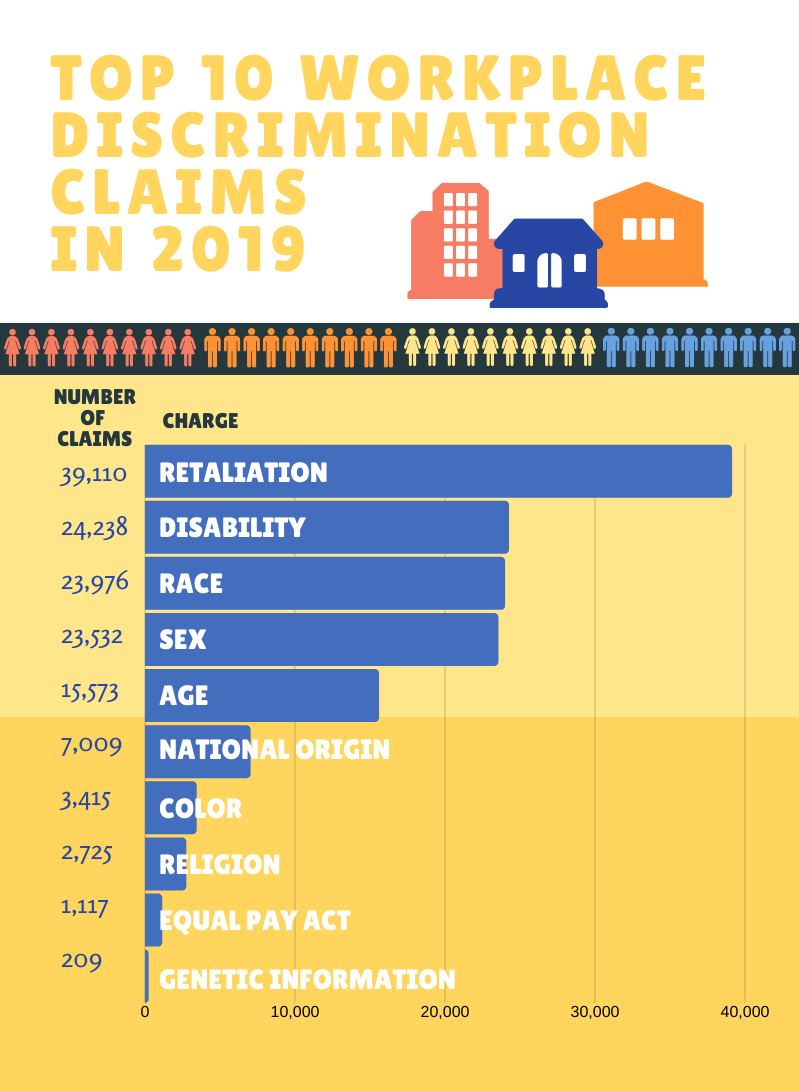
According to the EEOC, here are the top 10 reasons for workplace discrimination claims in fiscal year 2019:
What Employers Should Do
Employers should take the following steps to protect themselves from retaliation and other discrimination claims:
- Audit their practices to uncover any problematic situations
- Create a clear anti-retaliation policy that includes specific examples of what management can and cannot do when disciplining or terminating employees
- Provide training to management and employees on anti-retaliation and other discrimination policies
- Implement a user-friendly internal complaint procedure for employees
- Uphold a standard of workplace civility, which can reduce retaliatory behaviors
For more information on discrimination claims and for tips on how to protect your business, Connor & Gallagher OneSource has a team of HR consultants who can help. We can be reached at info@GoCGO.com
Sources: Zywave and EEOC.gov